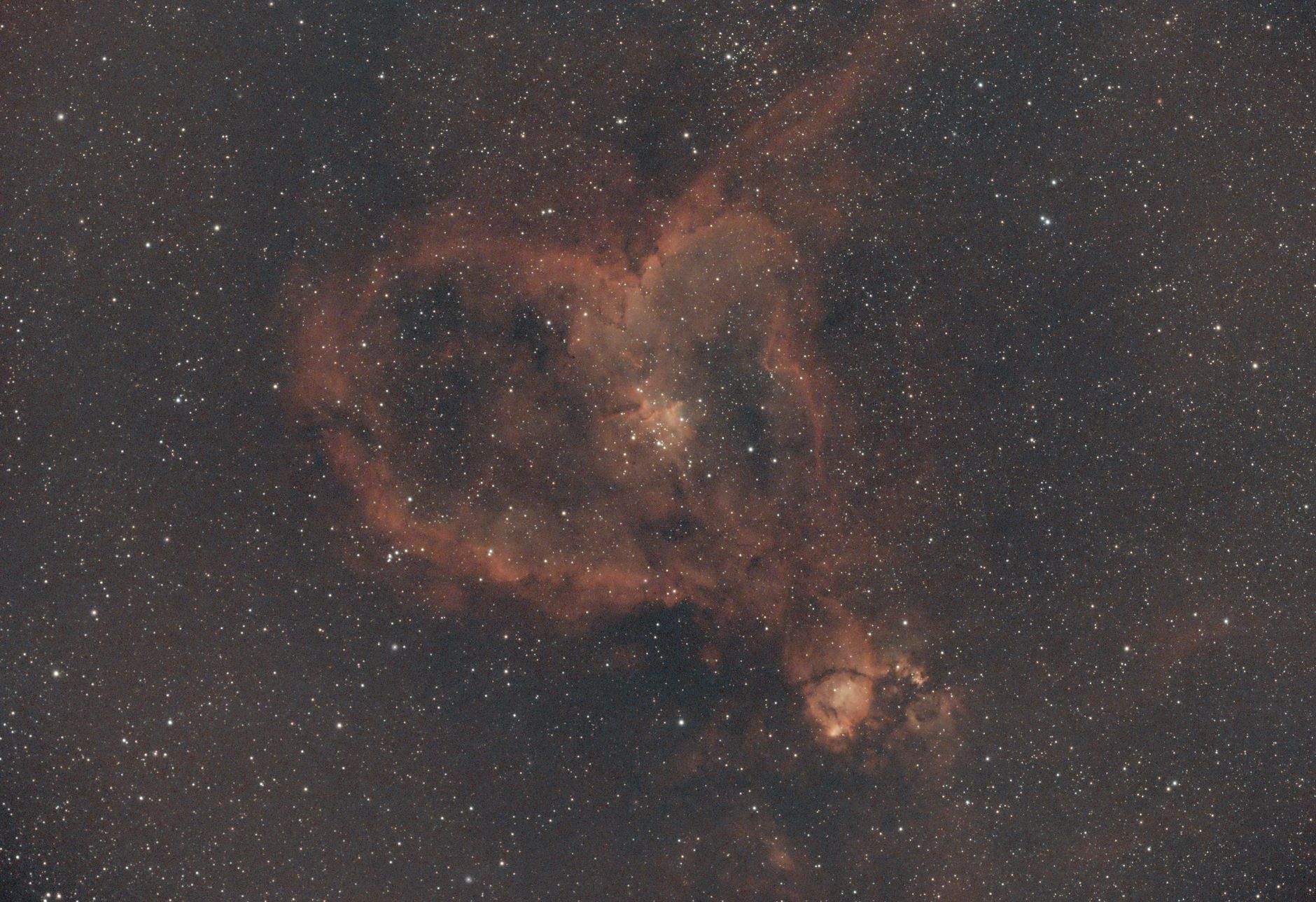
The heart of the Milky Way is an intriguing subject for astronomers and enthusiasts alike. This article reveals the latest discoveries and insights about our galaxy’s core, shedding light on its secrets and significance in the universe.
What Lies at the Heart of the Milky Way?
The heart of the Milky Way is a region that has fascinated astronomers and astrophysicists alike. It is home to a supermassive black hole known as Sagittarius A*, which has a mass equivalent to millions of suns. This enigmatic feature plays a crucial role in the dynamics of our galaxy.
Research suggests that the heart of the Milky Way is surrounded by a dense cluster of stars and gas, creating a unique environment where gravitational forces are incredibly strong. Understanding this region offers insights into the formation and evolution of galaxies.
Key discoveries about the heart of the Milky Way include:
- Star Formation: The area is a hotbed for new star creation, fueled by the vast amounts of gas present.
- Galactic Dynamics: The interaction between stars and the supermassive black hole helps to illuminate the structure and movement of our galaxy.
- Cosmic Phenomena: Observations have revealed various cosmic events, including the presence of exotic objects like neutron stars and pulsars.
These findings continue to deepen our understanding of the heart of the Milky Way and its significance in the universe.
Recent Discoveries in Galactic Research
Recent research into the heart of the Milky Way has unveiled groundbreaking insights that challenge previous assumptions about our galaxy. Astronomers using advanced telescopes have identified several new astronomical phenomena that shed light on the dynamics and composition of this enigmatic region.
One major discovery involves the detection of high-energy emissions from a previously unknown source, suggesting the presence of a new type of stellar object. This finding not only enhances our understanding of the mysterious core but also raises questions about the processes occurring in such extreme environments.
Moreover, scientists have begun to map the gravitational interactions of stars and gas clouds near the galactic center. This mapping provides valuable data on how these elements influence the formation and evolution of the heart of the Milky Way.
The implications of these discoveries are profound:
- They could lead to a better understanding of black hole formation.
- They might help explain the behavior of dark matter in galactic contexts.
- They offer new avenues for exploring the origins of our galaxy.
As research continues, the heart of the Milky Way remains a focal point for scientists eager to unlock the secrets of our universe.
Understanding Black Holes and Their Role
Understanding black holes is crucial to comprehending the dynamics at the heart of the Milky Way. These enigmatic entities, often formed from the remnants of massive stars, possess gravitational forces so strong that nothing, not even light, can escape their pull. The black hole at the center of our galaxy, known as Sagittarius A*, has been a focal point of astronomical research.
Recent studies suggest that black holes play a significant role in the evolution of galaxies. They influence star formation and the movement of stars within their vicinity. As matter spirals into a black hole, it emits intense radiation, providing astronomers with vital clues about its properties and the surrounding environment.
Key insights into the behavior of black holes have emerged from observations using advanced telescopes. These findings include:
- Evidence of high-velocity stars orbiting around Sagittarius A*.
- Measurements of gravitational waves from merging black holes.
- New techniques to visualize the event horizon of black holes.
These discoveries deepen our understanding of the heart of the Milky Way, revealing the complex interplay between black holes and their galactic surroundings.
The Importance of Stellar Formation
The study of stellar formation is crucial for understanding the heart of the Milky Way. This region, teeming with gas and dust, serves as the primary site for the birth of new stars. Scientists have long been intrigued by how these massive celestial bodies come into existence and evolve over time.
Research indicates that the conditions in the heart of the Milky Way are unique, allowing for a rapid rate of stellar formation. This phenomenon can be attributed to several factors:
- High Density of Matter: The core region is densely packed with molecular clouds, which provide the necessary ingredients for star formation.
- Gravitational Forces: The gravitational pull from existing stars and black holes influences the movement of gas and dust, facilitating the creation of new stars.
- Temperature Variations: Variations in temperature within these clouds can lead to different rates of star formation, impacting the overall dynamics of the region.
By studying these processes, astronomers can gain valuable insights into the lifecycle of stars and the evolution of galaxies, ultimately enhancing our understanding of the heart of the Milky Way.
Challenges in Observing the Galactic Core
Observing the heart of the Milky Way presents a myriad of challenges for astronomers and scientists. The region is shrouded in dense clouds of gas and dust, which obscure our view of the galactic core. This makes it difficult to gather clear data and images.
Additionally, the immense gravitational forces at play can complicate the understanding of star movements and interactions. Some of the key challenges include:
- Interstellar Dust: The thick clouds of gas and dust absorb and scatter light, making optical observations nearly impossible.
- Dynamic Environment: The core is a highly energetic and rapidly changing environment, filled with stars, gas, and radiation.
- Technological Limitations: While advancements in technology, such as radio and infrared telescopes, have improved our observational capabilities, they still face limitations in resolving fine details.
- Distance: The heart of the Milky Way is approximately 26,000 light-years away, complicating our ability to conduct detailed studies.
Despite these challenges, ongoing research continues to provide valuable insights into our galaxy’s core.
Future Missions to Explore Our Galaxy
As scientists continue to unravel the mysteries surrounding the heart of the Milky Way, future missions are poised to enhance our understanding of this enigmatic region. Upcoming projects aim to utilize advanced technologies and innovative methodologies to probe deeper into the Galactic core.
Key missions include:
- James Webb Space Telescope (JWST): This revolutionary telescope will provide unprecedented infrared observations, allowing astronomers to study the formation of stars and the dynamics of the supermassive black hole at the center of our galaxy.
- European Space Agency’s Gaia Mission: Gaia’s aim is to create a precise 3D map of our galaxy, which will help in tracking the motion of stars around the heart of the Milky Way and improve our understanding of its gravitational influence.
- Planned Observatories: New ground-based observatories equipped with advanced adaptive optics will help overcome atmospheric disturbances, providing clearer views of the Galactic core.
These missions promise to bring us closer to unlocking the secrets held within the heart of the Milky Way, potentially revealing insights that could reshape our understanding of the universe.
Conclusion: The Heart of the Milky Way’s Mysteries
As our understanding of the universe expands, the heart of the Milky Way remains a focal point of fascination and research. The complexities surrounding this galactic center have revealed profound insights into the formation and evolution of galaxies.
Through recent studies, astronomers have discovered that the heart of our galaxy is not just a simple mass of stars but a dynamic environment teeming with activity. Key findings include:
- The presence of a supermassive black hole, which plays a crucial role in the dynamics of the surrounding stars and gas.
- Evidence of high-velocity stars that offer clues about the gravitational influences exerted by the black hole.
- New methods of observing the galactic core, allowing scientists to gather data that was previously obscured by interstellar dust.
These revelations not only deepen our understanding of the heart of the Milky Way but also pave the way for future explorations. As missions aimed at studying our galaxy’s core continue, we can expect even more groundbreaking discoveries that will further illuminate the mysteries of the cosmos.
Photo by Enrico Bellodi on Pexels
